Blogs
Chameleónovité: Masters of Camouflage and Survival


Introduction
The natural world is filled with extraordinary creatures, but few animals capture human curiosity quite like the chameleons known scientifically as chameleónovité. These reptiles are famous for their color-changing abilities, unusual eyes, and slow, deliberate movements that make them appear almost unreal. For centuries, people have associated chameleónovité with mystery, transformation, and adaptation. Yet behind their striking appearance lies a complex group of animals with remarkable biological features that scientists are still studying today.
Chameleónovité are not simply lizards that change colors for entertainment or disguise. Their behavior is tied deeply to communication, body temperature regulation, mood, and survival. From the rainforests of Madagascar to dry African woodlands, these reptiles have evolved into highly specialized hunters capable of thriving in difficult environments. Their ability to blend into surroundings is only one small part of what makes them exceptional.
Interest in chameleónovité has increased worldwide because of wildlife documentaries, exotic pet culture, and scientific research focused on reptile evolution. However, many species now face serious threats due to habitat destruction, illegal wildlife trade, and climate change. Understanding these animals in greater depth reveals not only their beauty but also the fragile ecosystems they depend on.
What Is Chameleónovité
The term chameleónovité refers to the biological family Chamaeleonidae, a group of reptiles commonly known as chameleons. This family contains more than 200 recognized species distributed mainly across Africa, Madagascar, southern Europe, parts of the Middle East, and sections of Asia. Madagascar alone hosts a massive percentage of the world’s known chameleon species, many of which exist nowhere else on Earth.
READ MORE’ obstetrika and the Changing Science of Safe Childbirth
Chameleónovité belong to the reptile order Squamata, which also includes snakes and other lizards. What separates them from most reptiles is their highly specialized anatomy. Their independently moving eyes provide nearly 360-degree vision, while their projectile tongues allow them to catch insects at astonishing speed. Many species also possess prehensile tails that function like an additional limb when climbing branches.
These reptiles range dramatically in size. The tiny Brookesia nana, discovered in Madagascar, measures less than an inch long, while larger species such as the Parson’s chameleon can exceed two feet in length. Despite these differences, members of chameleónovité share similar evolutionary adaptations designed for life in trees and dense vegetation.
The Extraordinary Evolution of Chameleónovité
Scientists believe the ancestors of chameleónovité evolved millions of years ago, gradually developing traits suited for arboreal life. Fossil evidence suggests early chameleon relatives may have existed during the Paleogene period, although modern species diversified much later.
One of the most fascinating aspects of chameleónovité evolution is how isolated environments shaped unique species. Madagascar became a major center of diversification because geographic separation allowed species to evolve independently over long periods. This explains why the island contains such unusual varieties with distinct horns, crests, and body structures.
Evolution also favored stealth and patience over speed. Unlike many predators that chase prey aggressively, chameleónovité developed a hunting strategy based on stillness and precision. Their swaying movements imitate leaves shifting in the wind, reducing the chance of detection by insects or predators.
Over time, their skeletal structure adapted for climbing. Their feet split into opposing groups of toes, functioning almost like pincers that grip branches securely. Combined with strong tails and flexible limbs, these features transformed chameleónovité into highly effective tree-dwelling reptiles.
Why Chameleónovité Change Color
The idea that chameleons change color purely for camouflage is one of the most widespread misconceptions in zoology. While camouflage does play a role, the reality is far more complex.
The skin of chameleónovité contains specialized cells called chromatophores and iridophores. These cells manipulate pigments and reflect light differently depending on environmental and emotional conditions. Stress, fear, aggression, courtship, temperature changes, and communication all influence color variation.
Male chameleónovité often display brighter colors during territorial disputes or mating rituals. Intense reds, yellows, and blues can signal dominance or reproductive readiness. Darker tones may indicate illness, fear, or attempts to absorb heat in cooler weather.
Recent scientific research has shown that some species alter microscopic crystal structures beneath their skin to reflect different wavelengths of light. This mechanism produces rapid and dramatic shifts in appearance. Such discoveries demonstrate that chameleónovité possess one of the most advanced color-display systems found in reptiles.
Vision and Hunting Abilities
The visual system of chameleónovité is among the most sophisticated in the reptile world. Each eye moves independently, allowing the animal to observe two separate areas simultaneously. This gives the reptile an enormous field of vision without moving its head.
When prey is detected, both eyes focus forward to judge depth accurately. This transition from panoramic scanning to precise targeting happens within seconds. The tongue then launches outward with incredible acceleration, often reaching prey faster than the human eye can track.
The tongue of some chameleónovité species extends more than twice the length of their body. Elastic tissues store energy before release, creating explosive speed. The sticky tongue tip grips insects instantly, pulling them back into the mouth with remarkable efficiency.
This hunting method conserves energy. Instead of pursuing prey actively, chameleónovité rely on patience and precision. Such efficiency is especially valuable in habitats where food availability fluctuates seasonally.
The Diverse Habitats of Chameleónovité
Chameleónovité inhabit an impressive variety of ecosystems. Tropical rainforests provide dense vegetation and humidity ideal for many species, while others thrive in dry savannas, mountain forests, or semi-desert regions.
Madagascar remains the global center of chameleon diversity. The island’s isolated landscapes allowed species to adapt to highly specific ecological niches. Some inhabit rainforest canopies, while others remain close to the forest floor among dead leaves and moss.
African mainland species display equally fascinating adaptations. Certain desert-dwelling chameleónovité survive harsh heat by altering body color to regulate temperature and minimize water loss. Mountain species, meanwhile, endure cooler climates at higher elevations.
Habitat specialization makes these reptiles highly vulnerable to environmental changes. Deforestation and agricultural expansion destroy vegetation structures necessary for climbing, nesting, and hunting. Because many species occupy limited geographic ranges, even small habitat disturbances can threaten entire populations.
Reproduction and Life Cycle
The reproductive behavior of chameleónovité varies significantly among species. Most lay eggs, although some give birth to live young. Courtship often involves elaborate color displays and body movements designed to attract mates or intimidate rivals.
Female egg-laying species dig nests in soil where eggs remain buried for months. Incubation periods differ widely depending on temperature, humidity, and species characteristics. Some eggs hatch within a few months, while others require nearly a year.
Newly hatched chameleónovité are fully independent from birth. They instinctively climb vegetation and begin hunting tiny insects immediately. Survival rates in the wild are low because juveniles face numerous predators including birds, snakes, and larger reptiles.
Life expectancy also differs dramatically. Smaller species may survive only two or three years, whereas larger chameleónovité can live beyond a decade under favorable conditions. In captivity, proper environmental management significantly influences longevity.
Chameleónovité in Human Culture and Science
Throughout history, chameleons have symbolized transformation, patience, adaptability, and illusion. Ancient cultures often viewed them as mysterious creatures because of their unusual appearance and color-changing abilities. In some regions, folklore portrayed them as magical animals capable of influencing weather or fortune.
Modern science sees chameleónovité as valuable subjects for evolutionary biology and biomechanics research. Their visual systems, tongue mechanics, and skin structures inspire technological innovation in robotics, optics, and material science.
Researchers studying chameleónovité have gained insights into how biological nanostructures manipulate light. Such findings may eventually influence the development of advanced materials with adjustable color properties.
At the same time, these reptiles have become increasingly popular in the exotic pet trade. Species like the veiled chameleon and panther chameleon are commonly kept by reptile enthusiasts. However, improper care frequently leads to health problems because chameleónovité require precise humidity, lighting, and dietary conditions.
Threats Facing Chameleónovité Today
Despite their evolutionary success, many chameleónovité species now face uncertain futures. Habitat destruction remains the largest threat. Forest clearing for agriculture, logging, mining, and urban expansion continues to eliminate critical ecosystems across Africa and Madagascar.
Climate change presents additional challenges. Temperature shifts and altered rainfall patterns affect breeding cycles, vegetation growth, and insect populations that chameleónovité rely upon for food. Species with narrow habitat ranges are particularly vulnerable because they cannot easily relocate.
Illegal wildlife trade also contributes heavily to population decline. Rare and colorful species are often captured for international pet markets. Even when collection is technically regulated, smuggling remains difficult to control.
Conservation organizations increasingly emphasize habitat protection and captive breeding programs. Scientists are also conducting field surveys to identify species before they disappear. Several chameleónovité species have already become critically endangered due to rapid environmental change.
The Ecological Importance of Chameleónovité
Chameleónovité play an important role within their ecosystems. As insect predators, they help regulate populations of flies, grasshoppers, moths, and other invertebrates. This natural control contributes to ecological balance within forests and grasslands.
At the same time, chameleons serve as prey for birds, snakes, and mammals. Their position within food webs connects multiple layers of biodiversity. Removing them from ecosystems can disrupt predator-prey relationships in ways that scientists do not fully understand.
Because many chameleónovité species are highly sensitive to environmental disturbances, they also function as biological indicators. Declining populations may signal broader ecological problems such as pollution, habitat fragmentation, or climate instability.
Protecting these reptiles therefore benefits entire ecosystems rather than individual species alone.
READ MORE: ordenari and the Rise of Ingredient-Led Skincare
Conclusion
The world of chameleónovité is far more complex than the popular image of a color-changing lizard sitting quietly on a branch. These reptiles represent millions of years of evolutionary specialization, resulting in extraordinary vision, hunting precision, and adaptive behavior. Their ability to survive in diverse habitats reflects a delicate balance between biology and environment.
Yet the future of many chameleónovité species is increasingly uncertain. Human-driven habitat destruction, illegal trade, and climate change threaten some of the most unique reptiles on Earth. Greater awareness and conservation efforts are essential if future generations are to witness these remarkable creatures in the wild.
Studying chameleónovité also reminds us how much nature still has to teach humanity. From advanced color-changing skin structures to unmatched visual coordination, these reptiles continue to inspire scientific curiosity across multiple fields. They are not simply animals of camouflage; they are living examples of adaptation, resilience, and ecological complexity.
FAQs
What does chameleónovité mean?
Chameleónovité refers to the biological family of reptiles known as chameleons. It includes more than 200 species found mainly in Africa and Madagascar.
Why do chameleónovité change color?
Chameleónovité change color for communication, temperature regulation, emotional expression, and camouflage. The process involves specialized skin cells that manipulate light and pigment.
Where are most chameleónovité species found?
Most species live in Madagascar and mainland Africa, although some are also found in southern Europe, the Middle East, and parts of Asia.
Are chameleónovité dangerous to humans?
No, chameleónovité are generally harmless to humans. They are shy reptiles that primarily feed on insects and prefer avoiding confrontation.
Why are many chameleónovité species endangered?
Habitat destruction, climate change, and illegal wildlife trade are the main reasons many chameleónovité species face population decline and increasing extinction risk.
READ MORE: https://pamagazine.co.uk/

Introduction
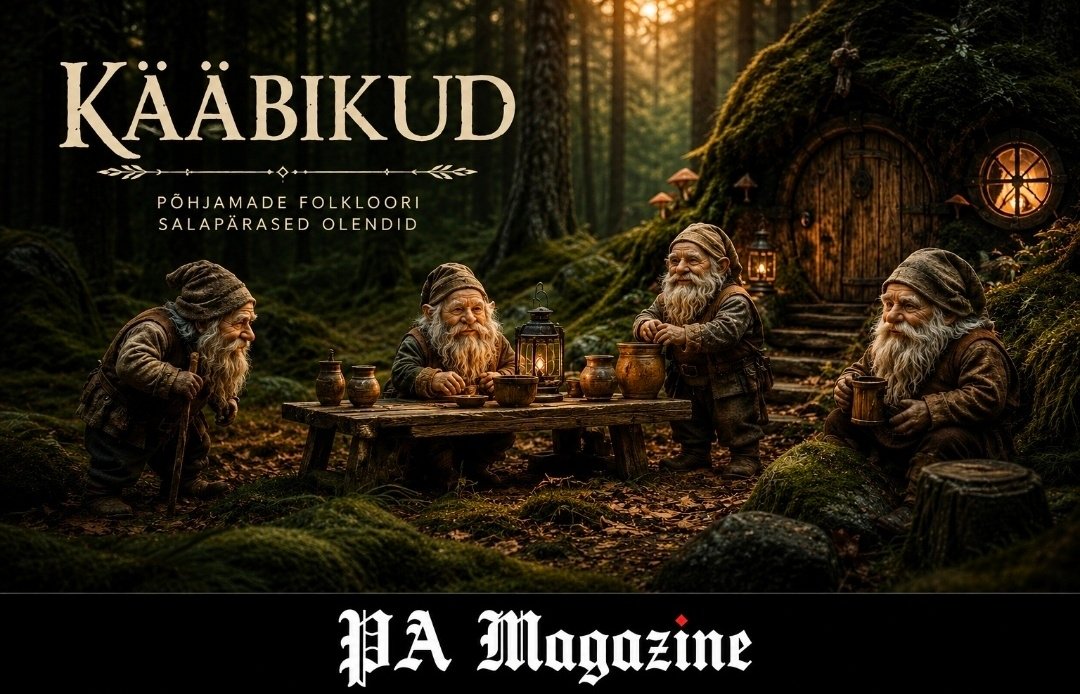
Across the mythic traditions of Northern Europe, few figures are as mysterious and culturally layered as kääbikud. The word carries echoes of folklore, ancient belief systems, oral storytelling, and symbolic interpretations that survived through generations long before modern entertainment reshaped fantasy creatures into simplified characters. Although many readers encounter similar beings in fantasy literature or cinema, kääbikud belong to a deeper cultural and linguistic heritage rooted in regional traditions and old-world imagination. Their presence reflects humanity’s fascination with hidden worlds, underground wisdom, craftsmanship, and the uneasy boundary between nature and civilization. Understanding kääbikud requires more than a surface-level definition because the concept touches language, mythology, identity, and centuries of storytelling that evolved with changing societies.
What Is kääbikud
The term kääbikud is associated with dwarf-like mythical beings found within Estonian and broader Northern European folklore traditions. Linguistically connected to words describing small or underground beings, kääbikud often represent creatures living apart from ordinary humans while possessing unusual knowledge, magical skill, or supernatural abilities. In various interpretations, they appear as hidden forest dwellers, underground craftsmen, guardians of ancient places, or mysterious figures tied to the earth itself.
READ MORE: Onnilaina and the Rise of Modern Digital Identity
Unlike the simplified portrayals often seen in modern fantasy entertainment, traditional kääbikud were not always comic or harmless figures. In older tales, they could be wise yet dangerous, generous yet unpredictable. Communities once used stories about such beings to explain strange natural events, hidden treasures, disappearing travelers, or sacred landscapes that inspired fear and curiosity. Because oral traditions changed from village to village, descriptions of kääbikud varied widely, giving the mythology remarkable flexibility and depth.
The Folkloric Origins of kääbikud
The roots of kääbikud stretch into pre-Christian storytelling traditions across the Baltic and Nordic regions. Ancient rural societies relied heavily on oral narratives to preserve memory, values, and spiritual beliefs. In these environments, supernatural beings were not always considered fictional. They occupied a symbolic place between reality and mystery, helping people interpret a world filled with dense forests, harsh winters, and unexplained phenomena.
Stories connected to kääbikud often emerged in isolated communities where natural landscapes dominated daily life. Caves, rocky hills, abandoned burial grounds, and deep forests became linked with hidden inhabitants who existed beyond human society. These legends reflected both fear and admiration. Villagers imagined that kääbikud possessed knowledge unavailable to ordinary people, particularly concerning metalwork, hidden wealth, healing practices, and ancient secrets.
As Christianity spread across Northern Europe, many pagan beliefs transformed rather than disappeared entirely. Kääbikud gradually shifted from spiritually significant beings into folklore characters, though traces of earlier sacred meanings remained embedded within the stories. This blending of traditions allowed the legends to survive even as societies modernized.
How kääbikud Differ From Modern Fantasy Dwarves
Modern fantasy literature has popularized dwarf-like characters across books, films, and games, yet traditional kääbikud differ in several meaningful ways. Contemporary fantasy often presents dwarves as standardized warriors or miners with predictable traits. Traditional folklore, however, rarely followed such rigid characterization.
Kääbikud were more ambiguous and unpredictable. Some stories described them as intelligent protectors of nature, while others portrayed them as suspicious beings who avoided human contact. Their morality was rarely simple. A respectful traveler might receive help or guidance, whereas greed or disrespect could lead to punishment or disappearance.
Physical descriptions also varied considerably. In some legends, kääbikud resembled unusually small humans with exceptional strength or age. In others, they appeared almost spirit-like, blending into forests or rocky landscapes. This uncertainty made them more mysterious than many modern fictional adaptations.
Another important difference lies in symbolism. Fantasy dwarves are frequently associated with adventure and warfare, but kääbikud often represented hidden wisdom, ancestral memory, and humanity’s uneasy relationship with the natural world. Their stories carried emotional and spiritual undertones that extended beyond entertainment.
The Symbolic Meaning Behind kääbikud
Folklore rarely exists without symbolic purpose, and kääbikud embody several deeper themes that continue to resonate today. One of the strongest symbols associated with these beings is hidden knowledge. Living apart from society, they represented truths concealed beneath the visible surface of life. Their underground or forest-associated existence mirrored the idea that wisdom often comes from forgotten or overlooked places.
Kääbikud also symbolized craftsmanship and endurance. In many Northern traditions, small mythical beings were linked to metalworking, carving, or building skills beyond human ability. This reflected admiration for artisans whose talents seemed almost magical in earlier societies.
Another layer of symbolism involves caution toward greed. Legends frequently warned against disturbing sacred places or attempting to steal hidden treasures guarded by supernatural beings. These stories reinforced communal values about humility and respect for boundaries.
At the same time, kääbikud represented cultural memory. They survived through oral tradition because they carried fragments of older belief systems long after formal religious structures changed. In this sense, they became living echoes of forgotten worldviews preserved through storytelling.
kääbikud in Estonian Cultural Identity
In Estonia, folklore remains closely connected to national identity, language preservation, and historical continuity. Traditional stories helped communities maintain cultural cohesion during periods of foreign influence, occupation, and social transformation. Within this context, kääbikud became part of a larger mythological landscape that reinforced connection to ancestral traditions.
Estonian folklore values nature deeply, and many legends emphasize harmony between humans and the environment. Kääbikud fit naturally within this worldview because they inhabit liminal spaces where civilization meets wilderness. Their stories remind listeners that the natural world possesses mystery deserving respect rather than domination.
Cultural preservation efforts in Estonia have also contributed to renewed interest in folklore creatures. Writers, historians, educators, and artists continue exploring traditional legends as a way to strengthen cultural awareness among younger generations. As a result, kääbikud remain relevant not merely as mythical beings but as symbols of linguistic and historical continuity.
Modern readers often rediscover such folklore during periods of rapid technological and social change. Ancient stories provide emotional grounding because they connect people with enduring questions about identity, belonging, mortality, and humanity’s place within nature.
The Role of Nature in kääbikud Legends
Nature is inseparable from the mythology surrounding kääbikud. Forests, stones, rivers, caves, and underground spaces appear repeatedly in traditional narratives because these environments once held spiritual significance within rural communities.
Dense forests especially played a powerful role in Northern imagination. Before industrial development, forests were sources of food, shelter, danger, and mystery. Travelers could easily become lost, and unfamiliar sounds or natural phenomena inspired supernatural explanations. Kääbikud emerged partly from this environment of uncertainty and awe.
Many legends portray these beings as protectors of hidden places. Sacred groves, ancient burial mounds, or untouched natural areas often became associated with supernatural guardians. Such stories may have functioned as informal systems of environmental protection by discouraging reckless behavior in culturally important landscapes.
The relationship between humans and kääbikud was therefore deeply tied to respect for nature. Characters who acted arrogantly or destructively frequently faced consequences, while humility and caution were rewarded. These moral patterns reveal how folklore reinforced social attitudes toward the environment long before modern ecological discussions emerged.
Why kääbikud Continue to Fascinate Modern Audiences
Despite living in an era dominated by science and technology, people remain deeply attracted to mythological figures like kääbikud. Part of this fascination comes from the emotional richness of folklore itself. Ancient stories contain ambiguity, symbolism, and mystery that modern life often lacks.
Kääbikud also appeal to contemporary audiences because they exist outside rigid categories. They are neither fully human nor entirely monstrous. Their complexity allows readers to project different meanings onto them depending on cultural context and personal interpretation.
Another reason for their enduring appeal involves the growing interest in regional folklore traditions. Global entertainment frequently standardizes mythology into familiar archetypes, yet audiences increasingly seek stories with authentic cultural roots. Kääbikud offer something distinct from mainstream fantasy because they emerge from specific linguistic and historical traditions rather than commercial storytelling formulas.
The rise of folklore-inspired literature, games, and visual art has further revived interest in lesser-known mythologies. Creators searching for richer narrative foundations often turn toward traditional legends that carry emotional and historical depth. In this environment, kääbikud continue gaining recognition beyond their original cultural setting.
The Linguistic Importance of the Word kääbikud
Language plays a crucial role in preserving mythology, and the word kääbikud itself carries cultural significance. Certain concepts lose nuance when translated into broader international terms like “dwarves” or “little people.” Native terminology preserves emotional associations and historical context that generic translations cannot fully capture.
Words rooted in folklore often contain layers of meaning accumulated across centuries. Pronunciation, regional usage, and linguistic evolution all contribute to how communities understand mythological beings. In this sense, preserving the term kääbikud helps maintain cultural authenticity.
Language also influences imagination. A localized word evokes a different emotional atmosphere than a globally standardized fantasy label. Readers encountering kääbikud for the first time sense that the concept belongs to a specific tradition with its own worldview and storytelling heritage.
This linguistic dimension explains why folklore scholars place strong importance on preserving original terminology whenever possible. The word itself becomes part of the mythology’s identity and historical continuity.
READ MORE: Casîo: The Timeless Innovation Behind Digital Watches
Conclusion
Kääbikud represent far more than small mythical beings hidden within old stories. They embody centuries of folklore, cultural memory, environmental symbolism, and human imagination shaped by Northern European traditions. Their legends reveal how earlier societies interpreted mystery, respected nature, and preserved wisdom through storytelling. Unlike many modern fantasy adaptations, traditional kääbikud resist simple classification. They can appear wise or threatening, protective or distant, symbolic or deeply spiritual depending on the narrative context.
Their continued relevance proves that ancient myths still speak powerfully to modern audiences searching for meaning beyond ordinary reality. In an increasingly fast-moving world, stories about kääbikud remind people of forgotten landscapes, ancestral beliefs, and the timeless human need to explain the unknown through imagination. By preserving these legends and the language connected to them, cultures maintain an important link between past and present that continues enriching literature, identity, and collective memory.
FAQs
What does the word kääbikud mean?
The word kääbikud generally refers to dwarf-like mythical beings connected to Estonian and Northern European folklore traditions. The term is associated with hidden creatures possessing unusual knowledge or supernatural qualities.
Are kääbikud the same as fantasy dwarves?
Not exactly. While there are similarities, traditional kääbikud are more complex and symbolic than many modern fantasy dwarves. Folklore versions often carry spiritual, environmental, and cultural meanings beyond adventure storytelling.
Where do stories about kääbikud originate?
Stories about kääbikud originate mainly from Estonian and broader Northern European folklore traditions that developed through oral storytelling over many centuries.
Why are kääbikud associated with forests and underground places?
Traditional legends connected kääbikud with mysterious natural spaces such as forests, caves, hills, and underground realms because these locations symbolized hidden knowledge and supernatural power.
Why are kääbikud still important today?
Kääbikud remain important because they preserve cultural heritage, linguistic identity, and traditional storytelling practices while continuing to inspire modern literature, art, and folklore studies.
READ MORE: https://pamagazine.co.uk/

Introduction
In recent years, public administration journalism in Italy has experienced a noticeable transformation. Readers are no longer satisfied with brief political headlines or shallow reporting about government institutions. Professionals, civil servants, policy observers, and ordinary citizens increasingly want detailed explanations about labor laws, pension reforms, employment policies, public sector contracts, and administrative reforms that directly affect their daily lives. This growing demand for focused and informative reporting has helped platforms like pamagazine.it gain wider attention among Italian readers.
The rise of pamagazine is closely connected to Italy’s ongoing discussions about public employment, bureaucracy, recruitment systems, welfare policies, and state modernization. Unlike entertainment-driven news portals, pamagazine concentrates on institutional reporting and public sector developments. The publication has built its reputation by covering topics that are often overlooked by mainstream media but remain extremely important for millions of workers and citizens across Italy.
What makes pamagazine.it particularly interesting is its attempt to combine journalistic reporting with practical relevance. Its articles frequently discuss salary negotiations, pension concerns, public competitions, administrative reforms, and labor-related regulations. These are not abstract political debates. They directly affect teachers, healthcare workers, municipal employees, ministry staff, retirees, and job applicants throughout the country.
As Italy continues to face economic pressure, demographic changes, and debates about government efficiency, publications such as pamagazine are becoming increasingly important sources of specialized information. Their role extends beyond news reporting because they also shape conversations surrounding accountability, labor protection, and institutional reform.
What Is Pa magazine
pamagazine.it is an Italian online publication focused primarily on public administration, labor issues, contracts, public employment, pensions, and institutional affairs. The platform publishes news reports, analysis pieces, opinion articles, and policy discussions related to Italy’s public sector. According to the publication’s official information page, pamagazine is directed by Giovanni Marmina and is published by Confsal-Unsa, an Italian labor organization connected to public sector representation.
READ MORE: newsakmi and the Rise of Community-Driven Modern News
The publication operates as a specialized media outlet rather than a general newspaper. Its content strongly emphasizes public employees, administrative systems, recruitment procedures, labor agreements, taxation updates, welfare programs, and economic decisions affecting government workers. The website frequently publishes updates concerning contracts, public competitions, retirement systems, and policy reforms within Italian institutions.
One of the defining features of pamagazine is its clear editorial direction toward public service matters. Instead of covering celebrity culture or broad entertainment trends, the platform prioritizes topics that influence workers inside Italy’s public administration system. This targeted focus has allowed pamagazine to develop a distinct identity within Italian media.
The Core Focus Areas of pamagazine
The content structure of pamagazine reveals a publication deeply invested in institutional and labor-related reporting. Several major themes appear repeatedly across the platform. One of the most significant is public employment. Articles often discuss hiring plans, recruitment shortages, regional staffing problems, and upcoming competitive examinations for government positions.
Another major focus is labor contracts. Italy’s public sector regularly negotiates collective agreements that determine salaries, benefits, and working conditions for millions of employees. pamagazine frequently analyzes these negotiations and explains their implications for workers across different departments and institutions.
Pension policy is another recurring topic. Italy’s retirement system has faced intense political and economic scrutiny for years due to demographic pressure and fiscal concerns. pamagazine regularly covers retirement age debates, pension reforms, severance payments, and legal disputes involving retired public employees.
The publication also dedicates substantial attention to welfare measures, tax updates, family support programs, and administrative reforms. This broad but interconnected coverage helps readers understand how institutional decisions influence public sector workers and citizens alike.
Why pamagazine.it Has Gained Attention
The growing visibility of pamagazine can be linked to a wider information gap within modern journalism. Many mainstream outlets summarize government reforms without fully explaining their practical consequences. Public workers, however, often require detailed and precise information because administrative changes directly affect their income, career progression, retirement planning, and workplace rights.
pamagazine fills this gap by offering focused reporting designed for readers who need more than headlines. Its articles typically provide context, institutional references, and detailed explanations regarding policies under discussion. This approach appeals especially to readers seeking clarity on complex administrative topics.
Another reason pamagazine.it has gained attention is the increasing public concern about government efficiency and workforce management. Italy has faced recurring discussions about aging public employees, regional staffing shortages, recruitment delays, and modernization challenges. pamagazine frequently addresses these structural issues, making it relevant during periods of political and economic uncertainty.
The platform also benefits from publishing commentary and viewpoints from figures connected to labor organizations and institutional discussions. These perspectives help readers understand how unions, administrators, and policy advocates interpret current developments.
The Relationship Between pamagazine and Italian Public Administration
Italy’s public administration system is enormous and deeply influential. It includes ministries, municipalities, schools, healthcare institutions, judicial offices, transport agencies, and countless regional departments. Managing such a large system creates constant debate about efficiency, staffing, modernization, and labor costs.
pamagazine positions itself within this institutional environment by focusing directly on the people and policies shaping the system. Articles often discuss administrative reforms aimed at improving efficiency or attracting younger workers into public service.
The publication also reflects broader anxieties surrounding workforce sustainability. Italy’s aging population has intensified concerns about future labor shortages within public administration. Reports discussing retirement projections and recruitment campaigns show how deeply these demographic pressures are influencing institutional planning.
By consistently covering these subjects, pamagazine has become part of the ongoing national conversation about how Italy should modernize its administrative systems while protecting workers’ rights and maintaining public services.
Public Employment and Recruitment Coverage
One of the strongest sections within pamagazine involves recruitment and competitive examinations for government jobs. Public competitions remain one of the main pathways into Italian civil service careers, making recruitment news extremely valuable for job seekers.
The publication frequently reports on planned hiring campaigns, examination procedures, ministry recruitment targets, and administrative staffing shortages. These articles attract readers preparing for public sector careers or monitoring employment opportunities.
Italy’s public employment system has struggled with bureaucratic delays and declining participation in certain competitions. pamagazine has explored these challenges in detail, including reports about candidates refusing temporary positions or decreasing participation in recruitment processes.
This focus on employment trends gives pamagazine practical relevance beyond traditional political journalism. For many readers, the platform functions as a professional resource connected to career planning and public sector opportunities.
Opinion Journalism and Institutional Commentary
Another important aspect of pamagazine is its opinion and commentary section. Unlike purely neutral reporting platforms, pamagazine also publishes interpretive discussions about labor rights, administrative reform, contract negotiations, and government policies.
Its “Punti di Vista” section features commentary addressing issues such as severance payment delays, public worker benefits, salary increases, and administrative modernization. These articles contribute to broader debates about fairness, efficiency, and institutional responsibility.
Opinion journalism plays a significant role in shaping public understanding because administrative policies can often appear technical or distant from everyday life. Commentary pieces help translate complex institutional matters into human consequences that readers can understand more clearly.
This combination of reporting and analysis allows pamagazine to function both as an informational platform and as a participant in public discourse.
How pamagazine.it Reflects Broader Economic Concerns
Many issues discussed on pamagazine are connected to Italy’s wider economic challenges. Inflation, labor costs, pension sustainability, healthcare funding, and workforce shortages all affect the public administration sector.
The platform regularly covers salary negotiations and purchasing power concerns among public employees. Rising living costs have intensified demands for wage adjustments and improved benefits, making labor contract discussions increasingly important.
Healthcare staffing shortages and retirement waves are also major themes within Italian public policy discussions. pamagazine frequently reports on these concerns, highlighting the practical impact of long-term demographic and economic pressures.
By covering these interconnected issues, pamagazine demonstrates how public administration is not isolated from society. Instead, it reflects broader national debates about economic stability, labor rights, and institutional resilience.
The Importance of Specialized Journalism
The existence of platforms like pamagazine illustrates the continuing importance of specialized journalism. General news outlets often prioritize fast-moving political drama, while specialized publications focus on detailed institutional coverage that serves professional audiences.
Specialized journalism becomes especially valuable when dealing with technical systems such as pensions, labor law, taxation, and administrative procedures. Readers affected by these systems require accuracy and depth rather than sensational headlines.
pamagazine has positioned itself within this niche by consistently publishing focused reporting about public administration and employment-related issues. Its audience likely includes civil servants, union members, administrative professionals, policy observers, and readers interested in Italian institutional affairs.
This specialization helps explain why pamagazine.it continues attracting attention despite operating in a competitive media environment.
READ MORE: M6 Walsall Birmingham Lanes Closure Triggers Travel Chaos
Conclusion
pamagazine.it has emerged as a notable voice within Italian institutional journalism by concentrating on public administration, labor issues, pensions, contracts, recruitment, and welfare policy. Rather than pursuing entertainment-driven traffic, pamagazine focuses on subjects that directly affect millions of workers and citizens across Italy.
Its reporting highlights some of the most important challenges facing Italian institutions today, including workforce shortages, aging employees, salary negotiations, administrative reform, and economic pressure on public systems. By combining news coverage with analysis and commentary, pamagazine offers readers a deeper understanding of policies that shape everyday professional and financial realities.
The growing relevance of pamagazine also reflects a wider demand for specialized journalism capable of explaining complex institutional issues with clarity and context. As debates surrounding public administration continue evolving in Italy, platforms like pamagazine are likely to remain important sources of information and public discussion.
FAQs
What is pamagazine.it mainly about?
pamagazine.it is an Italian online publication focused on public administration, labor issues, pensions, public employment, institutional reforms, and government-related policies.
Who publishes pamagazine?
According to the website’s official information, pamagazine is published by Confsal-Unsa and directed by Giovanni Marmina.
Why is pamagazine important for public employees?
pamagazine provides detailed reporting about contracts, recruitment, pensions, salary negotiations, and labor regulations that directly affect Italian public sector workers.
Does pamagazine cover recruitment and public competitions?
Yes, pamagazine regularly publishes articles about government recruitment campaigns, competitive examinations, staffing shortages, and public employment opportunities.
Is pamagazine only focused on politics?
No. While the publication discusses government policies, its primary focus is broader institutional reporting related to labor rights, pensions, contracts, administrative reforms, and public sector developments.
READ MORE: https://pamagazine.co.uk/
Introduction
The phrase “riverbank collapse iford playing fields” has recently attracted growing public attention as concerns surrounding erosion, flooding, and environmental safety continue to rise in riverside communities across southern England. What began as local discussion about unstable ground near a recreational space quickly evolved into a broader conversation about how vulnerable public areas can become when environmental pressures intensify over time.
Iford Playing Fields, located near the River Stour in Dorset, has long served as a community gathering place for outdoor recreation, sports, walking, and family activities. The landscape combines open green space with close river access, creating a scenic environment that residents value deeply. However, riverside beauty often comes with hidden risks. Soil erosion, water saturation, drainage failures, and changing weather conditions can quietly weaken embankments for years before a visible collapse occurs.
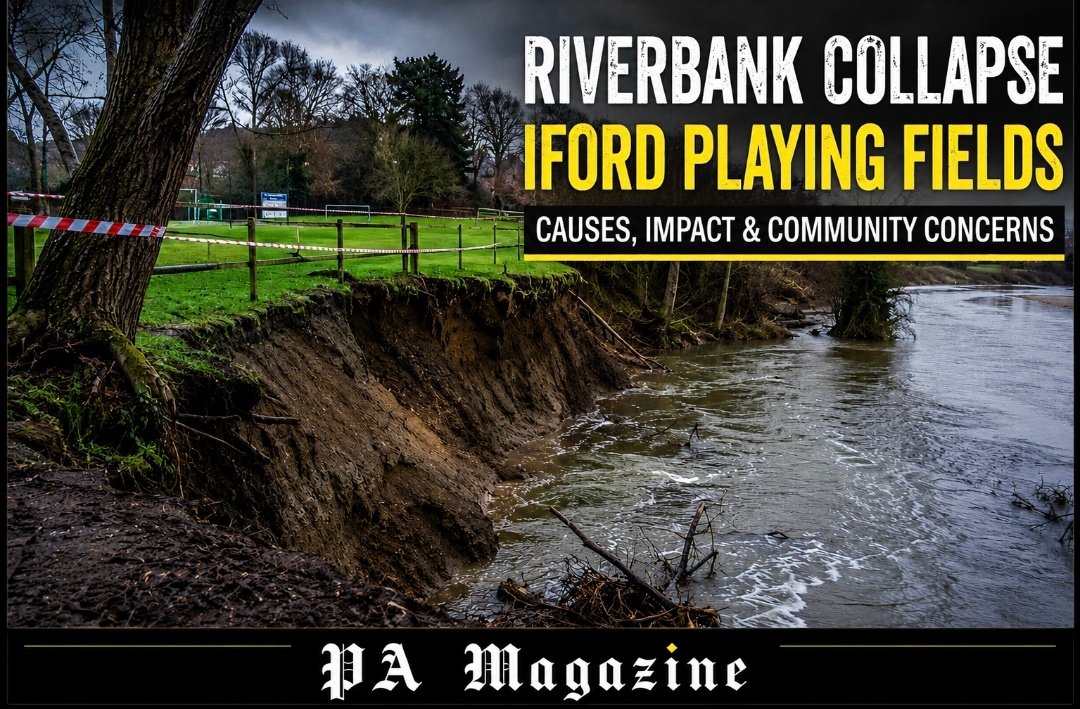
Reports connected to the riverbank collapse iford playing fields incident describe damaged embankments, fallen trees, unstable ground, and concerns about additional failures along vulnerable sections of the river edge. Although some online discussions exaggerated certain claims, the incident itself highlights a very real environmental challenge that affects riverside parks and public land throughout the United Kingdom.
The situation has become more than a local infrastructure concern. It now represents a larger warning about climate resilience, public safety, land management, and the importance of maintaining natural floodplain environments before problems become emergencies.
What Is riverbank collapse iford playing fields
The term “riverbank collapse iford playing fields” refers to the reported failure of a section of riverbank adjacent to Iford Playing Fields near the River Stour. The collapse involved erosion and structural weakening along the embankment, causing portions of land near the water’s edge to give way.
READ MORE: consumers outage map Reveals Hidden Patterns in Power Failures
Riverbank collapses occur when the forces holding soil together become weaker than the pressures acting against them. Water movement gradually erodes the lower sections of riverbanks, while heavy rainfall saturates upper soil layers. Over time, the ground loses stability. Eventually, sections of the embankment can slump, crack, or suddenly collapse into the river.
At Iford Playing Fields, several contributing conditions appear to have combined over an extended period. Prolonged wet weather increased soil saturation, fluctuating river levels intensified pressure against the bank, and weakened vegetation reduced the root systems that naturally stabilize riverside soil. Once these conditions reached a critical point, portions of the embankment reportedly failed.
The riverbank collapse iford playing fields discussion has become significant because the affected area is not an isolated natural zone. It is a heavily used public recreational space where children play sports, families gather, and pedestrians regularly walk near the river. That connection between environmental instability and everyday public use transformed the incident into a serious community concern.
Why Riverside Playing Fields Face Higher Erosion Risks
Playing fields located beside rivers are naturally vulnerable environments. These spaces are usually built on low-lying floodplain land because such terrain provides large flat open areas suitable for recreation. However, floodplains are also dynamic landscapes shaped continuously by water movement.
In the case of riverbank collapse iford playing fields, the River Stour likely played a central role in gradually weakening the embankment over many years. Flowing water constantly removes small particles of soil from riverbanks. Although this erosion often happens slowly, repeated cycles eventually reduce structural strength beneath the surface.
The danger becomes greater when heavy rainfall increases water levels. Saturated soil becomes heavier and loses internal cohesion. Once underground water pressure rises beyond what the soil can support, cracks begin forming. In some situations, the collapse appears sudden even though deterioration has been developing for years.
Human activity can accelerate these conditions. Frequent foot traffic near river edges compresses soil and damages vegetation. Recreational maintenance sometimes removes plants or trees that previously anchored the embankment with extensive root systems. Drainage systems can also become outdated, allowing excess water to collect underground instead of dispersing safely.
At Iford Playing Fields, these overlapping environmental pressures created a situation where even moderate additional stress could trigger a larger failure event.
How Weather Conditions Intensified the Problem
One of the most important factors connected to riverbank collapse iford playing fields appears to be prolonged wet weather. Across many parts of southern England, increasingly unpredictable rainfall patterns have placed greater strain on natural landscapes and older drainage infrastructure.
Heavy rain affects riverbanks in several destructive ways simultaneously. First, rainfall saturates upper soil layers, increasing their weight dramatically. Second, rising river levels apply stronger hydraulic pressure against embankments from below. Third, repeated wet and dry cycles weaken soil consistency and create hidden fractures underground.
Environmental specialists often warn that riverbank collapses are more likely after periods of fluctuating water levels. When river levels drop quickly after heavy rainfall, the soil remains saturated even though water pressure outside the bank decreases. This imbalance can cause soil to slide toward the river under its own weight.
The weather conditions surrounding riverbank collapse iford playing fields appear consistent with these known environmental processes. Reports describing prolonged rain and unstable ground suggest the collapse was not caused by a single event alone, but by cumulative environmental stress building over time.
Climate scientists increasingly point to these patterns as part of a broader challenge facing riverside communities throughout the UK. Infrastructure designed decades ago may no longer be prepared for modern rainfall intensity and flooding frequency.
Community Concerns Following the Collapse
The public reaction to riverbank collapse iford playing fields reveals how deeply local communities value shared outdoor spaces. Residents immediately expressed concern about public safety, especially for children using nearby sports grounds and pathways.
One of the strongest fears involved the possibility of additional collapses occurring without warning. Riverbank failures rarely affect only one isolated point. Once one section becomes unstable, neighboring areas may also weaken due to altered water flow and shifting soil pressure.
Local discussions also focused heavily on accessibility and recreation. Playing fields are often central social spaces within communities. Temporary closures disrupt sporting activities, walking routes, school events, and family gatherings. For many residents, the damage represented more than physical land loss. It symbolized the sudden vulnerability of a familiar and trusted environment.
Online discussions surrounding riverbank collapse iford playing fields occasionally included unverified claims regarding injuries or casualties. However, reliable reporting has not confirmed major fatalities associated with the incident. Much of the public concern appears tied to potential risks rather than documented tragedy.
Even without confirmed casualties, the emotional impact on the community remains significant. When public spaces appear unsafe, confidence in local infrastructure and environmental management can quickly decline.
Environmental Consequences Beyond the Visible Damage
The visible collapse of soil and trees is only one part of the environmental impact connected to riverbank collapse iford playing fields. Riverbank failures can create long-lasting ecological disruption that extends well beyond the immediate area.
When large amounts of soil enter a river suddenly, water quality deteriorates rapidly. Increased sediment reduces sunlight penetration and lowers oxygen availability for aquatic species. Fish breeding areas may become buried beneath debris, while underwater vegetation struggles to survive in cloudy conditions.
Wildlife habitats along riverbanks are also highly sensitive to erosion events. Birds, amphibians, insects, and small mammals rely on stable vegetation near the water’s edge. Once embankments collapse, many species lose nesting areas and shelter simultaneously.
Another concern involves flooding risk. Riverbank failures can alter river flow patterns in unpredictable ways. Changes in channel shape may redirect water pressure toward nearby land, increasing erosion elsewhere downstream.
The riverbank collapse iford playing fields incident therefore represents both a public safety issue and a broader environmental management challenge. Protecting recreational spaces increasingly requires balancing human access with long-term ecological resilience.
The Role of Local Authorities and Engineers
Whenever a significant riverbank issue develops near public land, responsibility usually falls across multiple agencies. Local councils, environmental organizations, engineers, and land management teams must coordinate responses quickly to prevent further damage.
In incidents like riverbank collapse iford playing fields, the immediate priority is securing the affected area. Dangerous sections are often fenced off while specialists assess whether neighboring land remains stable. Engineers may conduct geotechnical surveys to examine soil composition, underground moisture levels, and erosion patterns.
Temporary stabilization methods can include geotextile reinforcement, drainage adjustments, retaining structures, and controlled vegetation planting. Longer-term restoration efforts often focus on natural solutions rather than heavy concrete engineering alone.
Modern environmental planning increasingly favors “soft engineering” approaches that work alongside natural river processes. Deep-rooted vegetation, carefully reshaped embankments, and restored wetlands can strengthen riverbanks while preserving ecological health.
The discussions surrounding riverbank collapse iford playing fields also highlight the growing importance of preventative maintenance. Waiting until visible collapse occurs is usually far more expensive than monitoring erosion early and reinforcing vulnerable areas before major failure develops.
How Climate Change Is Reshaping River Management
The riverbank collapse iford playing fields situation reflects a wider environmental reality facing many parts of Britain. Climate change is altering rainfall intensity, river behavior, flooding frequency, and soil stability in ways that older infrastructure systems were never designed to manage.
Historically, many riverside recreational areas depended on natural stability patterns that remained relatively predictable for decades. Today, weather extremes are becoming more common. Intense storms can saturate ground rapidly, while sudden dry periods weaken vegetation and soil cohesion.
Environmental experts increasingly argue that climate adaptation must become central to urban planning. Recreational spaces near rivers need stronger drainage systems, more frequent inspections, and improved ecological protection strategies.
The Iford situation demonstrates how environmental changes can directly affect ordinary public life. A riverbank collapse is no longer viewed solely as a natural occurrence. It is increasingly understood as part of a larger conversation about resilience, sustainability, and infrastructure preparedness in a changing climate.
READ MORE: twycross zoo and the Conservation Legacy Behind It
Conclusion
The riverbank collapse iford playing fields incident has become an important reminder of how fragile riverside environments can be when natural forces, aging infrastructure, and climate pressures combine. What appeared at first to be a localized erosion problem quickly exposed broader concerns involving public safety, environmental protection, flood management, and long-term land stability.
Iford Playing Fields has long been valued as a community space where recreation and nature exist side by side. The collapse disrupted not only the physical landscape but also the sense of security associated with the area. Yet the incident also created an opportunity for deeper public awareness about river management and environmental responsibility.
The lessons emerging from riverbank collapse iford playing fields extend far beyond Dorset. Communities throughout the UK face similar risks as weather patterns become more unpredictable and riverside infrastructure ages. Preventative planning, ecological restoration, and responsible maintenance are becoming essential rather than optional.
Ultimately, the incident demonstrates that protecting public spaces requires understanding the natural systems surrounding them. Rivers constantly reshape the landscapes beside them. The challenge for modern communities is learning how to live alongside those forces safely, sustainably, and intelligently.
FAQs
What caused the riverbank collapse iford playing fields incident?
The collapse was likely caused by a combination of river erosion, prolonged rainfall, saturated soil, fluctuating water levels, and weakened vegetation along the embankment.
Where are Iford Playing Fields located?
Iford Playing Fields are located near the River Stour in Dorset, England, and are widely used for recreation, sports, and community activities.
Were there confirmed injuries from riverbank collapse iford playing fields?
Public discussions raised safety concerns, but major verified news sources have not confirmed fatalities connected directly to the incident.
Why are riverside playing fields vulnerable to collapse?
Riverside playing fields are usually built on floodplain land, which is naturally exposed to erosion, soil saturation, flooding, and shifting river conditions over time.
Can future riverbank collapses be prevented?
Many collapses can be reduced or delayed through regular inspections, improved drainage systems, vegetation restoration, erosion control measures, and better environmental planning.
READ MORE: https://pamagazine.co.uk/

Who Is eugene gligor? The Shocking True Crime Story

Who Is alyssa pladl? A Tragic Story of Survival and Loss

vçç and the Hidden Shift in Modern Expression Systems

Burt Thicke: The Real Story Behind the Name, Alan Thicke’s Legacy, and Robin Thicke’s Family History

Who Is Kathy Sudeikis? Everything About Jason Sudeikis’s Mother
