
Travel
twycross zoo and the Conservation Legacy Behind It


Introduction
In the heart of rural Leicestershire, England, Twycross Zoo has built a reputation that stretches far beyond a traditional family attraction. While many zoos focus primarily on entertainment, twycross zoo has steadily transformed itself into a center for wildlife conservation, scientific research, education, and endangered species protection. For decades, it has attracted visitors interested not only in seeing rare animals but also in understanding the growing environmental challenges affecting wildlife around the world.
The story of twycross zoo is deeply tied to Britain’s evolving relationship with conservation. What began as a relatively modest zoological collection eventually became internationally recognized for its primate population, breeding programs, and dedication to species survival. Today, twycross zoo represents a modern vision of how zoological institutions can balance public engagement with serious ecological responsibility.
The zoo’s atmosphere differs noticeably from many commercial attractions. The grounds combine educational exhibits with carefully designed habitats intended to encourage more natural animal behaviors. Visitors often leave with a greater awareness of habitat destruction, illegal wildlife trade, and climate-related threats facing animals across the globe. This educational role has become one of the defining strengths of twycross zoo in recent years.
Beyond its public-facing exhibits, twycross zoo contributes to international breeding programs, veterinary advancements, and academic partnerships. It is also one of the few places in the United Kingdom where visitors can observe such a broad collection of primates in one location. These features have helped solidify its importance within the wider European zoo community.
What Is twycross zoo
Twycross Zoo is a major wildlife park and conservation center located in Leicestershire, England. Established in 1963, the zoo was originally founded by Molly Badham and Nathalie Evans, two women whose fascination with exotic animals led to the creation of one of Britain’s most distinctive zoological institutions. Over time, the zoo expanded significantly, evolving from a private collection into a respected conservation-focused organization.
READ MORE: easyjet flight u24429 emergency Shook Lyon Skies
What separates twycross zoo from many other British zoos is its historic specialization in primates. The zoo gained international attention for housing every species of great ape, including gorillas, orangutans, chimpanzees, and bonobos. This achievement was particularly notable because bonobos remain one of the rarest and least understood great apes in captivity.
Modern twycross zoo now operates as both a visitor destination and a conservation charity. Its mission extends beyond displaying animals to the public. The institution actively supports breeding programs for endangered species, funds conservation projects in the wild, and collaborates with universities and research organizations. Educational outreach programs also play a major role, especially for school groups and young visitors.
The zoo currently houses hundreds of animals from around the world, including mammals, reptiles, birds, and amphibians. Many of these species face serious population declines in the wild. Through habitat simulation, veterinary care, and behavioral enrichment, twycross zoo aims to improve both animal welfare and public understanding of biodiversity.
The Early History of twycross zoo
The origins of twycross zoo reflect an unusual and determined vision. Molly Badham and Nathalie Evans began collecting exotic animals during a period when wildlife ownership laws were far less restrictive than they are today. Their fascination with primates eventually shaped the direction of the entire institution.
In the early years, the zoo operated on a much smaller scale than it does today. However, the founders’ dedication to breeding and caring for rare species quickly attracted attention. By the 1970s, twycross zoo had developed a reputation for its primate expertise, particularly in ape management and breeding success.
The founders were known for their hands-on approach to animal care. Stories from the zoo’s early decades often describe close relationships between staff and animals, though modern standards have understandably changed many of those practices. The institution gradually shifted toward more scientific and welfare-centered management as zoological knowledge advanced.
During the late twentieth century, public attitudes toward zoos also evolved. Visitors increasingly expected educational value, ethical animal care, and conservation leadership rather than simple entertainment. Twycross zoo adapted to these expectations by redesigning enclosures, investing in veterinary facilities, and expanding its educational initiatives.
Why twycross zoo Became Famous for Primates
Few zoos in Europe have developed a primate collection as significant as the one at twycross zoo. This specialization helped the institution stand out internationally and contributed to its scientific importance.
One of the zoo’s most remarkable achievements was becoming the first zoo in the United Kingdom to house all four great ape species simultaneously. The presence of bonobos was especially significant because these apes are rarely seen outside carefully managed conservation programs. Bonobos share close genetic similarities with humans and display highly complex social behavior, making them particularly valuable for behavioral research and conservation awareness.
The zoo’s chimpanzees, gorillas, and orangutans have also played important roles in European breeding programs. These coordinated programs help maintain healthy genetic diversity among captive populations, which may prove critical for future conservation efforts.
Primates require highly complex care environments. Their intelligence demands mental stimulation, social interaction, and behavioral enrichment. Twycross zoo has invested heavily in habitat improvements to better reflect these needs. Indoor climbing systems, outdoor vegetation, feeding puzzles, and social grouping strategies are all designed to encourage natural activity patterns.
Researchers have also worked alongside the zoo to study communication, cognition, and social relationships among primates. These studies contribute not only to animal care improvements but also to broader scientific understanding of evolution and behavior.
Conservation Efforts at twycross zoo
Conservation has become central to the identity of twycross zoo. Modern zoos face growing pressure to demonstrate meaningful environmental contributions, and twycross zoo has responded by expanding its conservation initiatives both locally and internationally.
The zoo participates in multiple European endangered species breeding programs. These initiatives are carefully coordinated across accredited institutions to preserve genetic diversity among vulnerable animal populations. Species involved in these programs often include critically endangered primates, big cats, and rare reptiles.
Twycross zoo also supports field conservation projects in countries facing habitat destruction and poaching crises. Financial contributions, public fundraising campaigns, and awareness programs help support wildlife protection efforts beyond the zoo’s physical boundaries.
Education remains another major conservation tool. School visits, interactive exhibits, and educational talks encourage visitors to think critically about environmental responsibility. Rather than presenting animals as isolated attractions, the zoo increasingly emphasizes ecosystems, habitat preservation, and sustainable living practices.
The institution has also invested in more environmentally conscious operations. Waste reduction strategies, energy efficiency improvements, and sustainable sourcing initiatives reflect a growing recognition that conservation work must extend into everyday organizational practices.
Animal Welfare and Habitat Design
Animal welfare standards have changed dramatically over the past several decades, and twycross zoo has undergone major transformations to reflect these advancements. Older zoo models often prioritized visibility for visitors over the physical and psychological needs of animals. Today, the emphasis is increasingly placed on enrichment, natural behaviors, and species-specific care.
Habitat redesign projects at twycross zoo have focused on creating larger and more stimulating environments. Modern enclosures frequently include elevated climbing areas, hidden feeding opportunities, water features, vegetation, and private retreat spaces for animals seeking reduced public exposure.
Behavioral enrichment programs are now considered essential. Care teams regularly introduce puzzles, scents, feeding challenges, and changing environmental conditions to prevent boredom and encourage natural instincts. These activities are especially important for intelligent species such as primates, parrots, and big cats.
Veterinary care has also become highly sophisticated. The zoo employs trained specialists capable of managing complex medical needs, preventive healthcare programs, and emergency treatment. Nutritional planning, reproductive management, and behavioral monitoring all contribute to long-term animal welfare.
Public transparency regarding welfare standards has become increasingly important as well. Visitors today are more informed and often more critical about animal care practices. Twycross zoo has responded by openly communicating its conservation goals, welfare standards, and ongoing habitat improvements.
The Visitor Experience at twycross zoo
A visit to twycross zoo combines wildlife observation with educational storytelling. The layout encourages visitors to move through a range of themed areas representing different ecosystems and animal groups. While primates remain a major attraction, the zoo also features giraffes, snow leopards, reptiles, penguins, and numerous bird species.
One of the most appealing aspects of twycross zoo is its family-friendly atmosphere. Interactive educational spaces help younger visitors engage with wildlife conservation in accessible ways. Informational displays avoid overly technical language while still presenting meaningful environmental concepts.
The zoo’s indoor tropical environments are particularly popular during colder months in England. These enclosed habitats allow visitors to observe species in carefully climate-controlled settings that better reflect their natural environments.
Seasonal events, conservation campaigns, and educational workshops add further depth to the visitor experience. Rather than relying solely on spectacle, twycross zoo increasingly focuses on encouraging curiosity and environmental awareness.
Accessibility improvements have also become a priority. Pathways, visitor facilities, and educational resources are designed to accommodate a wider range of guests, making the zoo more inclusive for families and individuals with varying needs.
Challenges Facing Modern Zoos
Like many zoological institutions, twycross zoo operates within an increasingly complex ethical and financial landscape. Public debates about animal captivity continue to shape how zoos are perceived and managed. Critics argue that wild animals should never be confined, while supporters believe accredited conservation-focused zoos play an essential role in protecting endangered species.
Twycross zoo faces the challenge of balancing public expectations with the practical realities of animal care and conservation funding. Large-scale habitat improvements, veterinary services, staffing, and breeding programs require significant financial investment. Visitor revenue often supports much of this work.
Climate change also presents growing difficulties for wildlife institutions worldwide. Many species housed in zoos are threatened by habitat loss, rising temperatures, and ecosystem disruption. Conservation organizations increasingly view captive breeding programs as part of a broader strategy to prevent extinction.
Another challenge involves maintaining public trust. Modern audiences demand higher welfare standards, ethical transparency, and meaningful conservation outcomes. Zoos that fail to evolve risk criticism and declining support. Twycross zoo has attempted to address these concerns through modernization projects, educational outreach, and conservation partnerships.
The Future of twycross zoo
The future direction of twycross zoo appears closely tied to conservation science and immersive education. As public understanding of biodiversity loss grows, zoos are increasingly expected to function as conservation institutions rather than simple attractions.
Future developments at twycross zoo are likely to include further habitat expansion, advanced veterinary technology, and stronger partnerships with international wildlife organizations. Greater emphasis may also be placed on sustainability, renewable energy, and ecological responsibility within the zoo itself.
Educational innovation will probably remain central as well. Younger generations are growing up in a world increasingly shaped by climate concerns and environmental activism. Twycross zoo has the opportunity to serve as a place where visitors connect emotionally with wildlife while gaining a deeper understanding of conservation challenges.
The institution’s long-standing primate expertise will likely continue to define its global reputation. As great ape populations decline in the wild due to deforestation and illegal hunting, responsible breeding and research programs may become even more significant.
READ MORE’ Chameleónovité: Masters of Camouflage and Survival
Conclusion
Twycross Zoo represents far more than a traditional zoo experience. Over the decades, it has evolved into a respected conservation institution dedicated to endangered species protection, animal welfare, scientific research, and public education. Its internationally recognized primate collection remains one of its defining features, but the zoo’s broader conservation mission now shapes nearly every aspect of its operations.
The history of twycross zoo reflects the changing role of zoos in modern society. What once focused mainly on animal display has gradually transformed into a mission centered on sustainability, biodiversity awareness, and environmental responsibility. Through habitat improvements, breeding programs, educational outreach, and conservation partnerships, the zoo continues to adapt to modern ethical expectations.
As wildlife populations face increasing global threats, institutions like twycross zoo may play an increasingly important role in preserving species and inspiring public engagement with conservation issues. Its continued evolution demonstrates how zoological organizations can contribute meaningfully to both science and environmental awareness while still offering memorable visitor experiences.
FAQs
What is twycross zoo best known for?
Twycross zoo is best known for its extensive primate collection, particularly its great apes. It became internationally recognized for housing gorillas, orangutans, chimpanzees, and bonobos within the same institution.
Where is twycross zoo located?
Twycross zoo is located in Leicestershire, England, near the village of Twycross and close to the Warwickshire border.
Does twycross zoo focus on conservation?
Yes, conservation is a major part of twycross zoo’s mission. The zoo participates in endangered species breeding programs, supports international wildlife projects, and provides educational programs focused on biodiversity and habitat protection.
Can visitors see endangered animals at twycross zoo?
Visitors can observe many endangered species at twycross zoo, including several rare primates, big cats, and reptiles involved in conservation breeding initiatives.
Is twycross zoo suitable for families and children?
Yes, twycross zoo is widely considered family-friendly. It offers educational exhibits, interactive learning spaces, indoor habitats, and accessible visitor facilities designed for guests of different ages.
READ MORE: https://pamagazine.co.uk/

Introduction
Far from the crowded tourist coastlines of Southeast Asia lies lucipara, a remote island group surrounded by deep blue water, thriving coral reefs, and an atmosphere of near-complete isolation. Located in the Banda Sea within Indonesia’s Maluku region, lucipara remains one of the least discussed yet ecologically fascinating places in the maritime world. The islands are known for their untouched marine ecosystems, turtle nesting grounds, dramatic reef walls, and historical mystery connected to old sea voyages. Unlike heavily commercialized island destinations, lucipara has preserved a raw and almost ancient character that continues to attract marine scientists, adventurous divers, environmental researchers, and travelers searching for places that still feel undiscovered.
The growing attention around lucipara is not driven by luxury development or modern infrastructure. Instead, interest comes from its ecological richness, difficult accessibility, and the rare opportunity to witness marine biodiversity in a condition that resembles the natural balance of centuries past. This hidden island chain has become increasingly important in discussions about marine conservation, reef preservation, and sustainable exploration.
What Is lucipara
lucipara refers to a remote atoll island group located in the Banda Sea south of Ambon in Indonesia’s Maluku Islands. The islands are part of a broader marine region historically connected to ancient spice trade routes and maritime exploration across eastern Indonesia. The area consists mainly of small coral islands surrounded by shallow lagoons, reef systems, and steep underwater drop-offs.
READ MORE: kääbikud and the Hidden Legacy of Northern Folklore
The isolation of lucipara has played a major role in protecting its natural environment. Unlike heavily populated island regions, there are no large settlements permanently established on the islands today. Some families connected to historical claims occasionally visit parts of the area for temporary coconut harvesting or fishing activities, but human presence remains limited for most of the year.
Marine researchers often describe lucipara as one of the rare locations where reef systems still display strong ecological health. Large fish populations, nesting sea turtles, reef sharks, giant trevallies, and healthy coral structures continue to exist in significant numbers because the area has experienced relatively low industrial pressure compared to many other tropical marine regions.
The Geographic Importance of lucipara
The location of lucipara within the Banda Sea gives the islands unusual environmental significance. The Banda Sea itself is known for deep ocean trenches, nutrient-rich waters, and strong marine currents that support extraordinary biodiversity. Because lucipara sits within this oceanic environment, the islands function as an important ecological transition zone where pelagic species and coral reef ecosystems interact.
The surrounding waters are influenced by seasonal monsoon systems, changing currents, and deep-water upwelling. These conditions contribute to the high concentration of marine life observed around the reefs. Scientists and divers frequently report sightings of tuna, reef sharks, manta rays, barracudas, sea turtles, and massive schools of reef fish.
The geographic isolation also creates logistical challenges. Reaching lucipara usually requires long boat journeys from Ambon, often taking more than half a day under favorable weather conditions. Access becomes especially difficult during rough monsoon periods when sea conditions become dangerous for small vessels. This remoteness has unintentionally protected the islands from overdevelopment and mass tourism.
Marine Biodiversity Around lucipara
One of the strongest reasons for scientific and environmental interest in lucipara is the exceptional biodiversity surrounding the islands. Coral reefs near the atolls support large populations of fish species rarely seen in such abundance elsewhere in Southeast Asia. Divers exploring the reefs often encounter giant trevallies, surgeonfish, napoleon wrasse, groupers, snappers, and reef sharks within short distances.
Sea turtles represent one of the most remarkable ecological features of lucipara. Green turtles and hawksbill turtles regularly use the beaches as nesting grounds. Researchers and visitors have documented numerous nesting tracks across the sandy shorelines during breeding seasons. The relatively low human disturbance increases the survival chances of turtle populations compared to heavily developed coastlines elsewhere.
The coral systems surrounding lucipara are equally important. Reef walls descend dramatically into deep ocean water, creating habitats for both shallow-water coral communities and large pelagic species. In many tropical marine regions, coral bleaching and reef degradation have severely reduced biodiversity. However, portions of the lucipara reef system still show impressive resilience and healthy coral growth.
The area is also valuable for seabird populations. Frigatebirds and boobies frequently nest and feed around the islands, taking advantage of nutrient-rich waters where fish populations remain abundant. This connection between bird life, reef ecosystems, and open-ocean species highlights the ecological complexity of the region.
Historical Connections and Maritime Stories
Although lucipara is primarily discussed for its environmental importance today, the islands also hold a fascinating maritime history. Historical records from the nineteenth century mention ship movements, navigation challenges, and rescue stories associated with the isolated atolls.
One of the most widely repeated accounts involves the Dutch steamer Willem I, which reportedly shipwrecked near the islands in the 1830s. Survivors, including government officials and passengers, were stranded for weeks before rescue efforts succeeded. The harsh conditions forced them to survive with limited drinking water and minimal shelter on the tiny coral islands.
Stories like these reveal how dangerous navigation through eastern Indonesian waters once was. Before modern satellite systems and advanced marine technology, sailors relied heavily on maps, stars, weather interpretation, and local maritime knowledge. Coral reefs around lucipara could become deadly obstacles for ships traveling through unfamiliar waters.
The islands also reflect the larger maritime history of the Maluku region, once central to global spice trade networks. For centuries, European colonial powers, Arab traders, and Asian merchants crossed these seas seeking cloves, nutmeg, and other valuable commodities. Even though lucipara itself remained remote, it existed within an important historical maritime corridor.
Why lucipara Remains Largely Undiscovered
Modern tourism has transformed many tropical islands into commercial destinations filled with resorts, crowded beaches, and large transportation networks. lucipara followed a different path. Its remoteness, lack of infrastructure, and challenging accessibility prevented large-scale tourism development.
This isolation created both advantages and disadvantages. On one hand, the islands avoided destructive coastal construction, pollution, and overcrowding. Marine ecosystems therefore remained healthier than those near major tourist hubs. On the other hand, the lack of infrastructure also means limited emergency services, transportation options, and scientific facilities.
Another reason lucipara remains relatively unknown is the dominance of famous Indonesian destinations such as Bali, Raja Ampat, and Komodo in global tourism marketing. These regions attract far more investment and international attention, leaving smaller marine environments like lucipara outside mainstream travel discussions.
Yet this obscurity has become part of the islands’ identity. Travelers who reach lucipara often describe the experience as encountering one of the few marine landscapes that still feels genuinely untouched. The silence, absence of crowds, and overwhelming natural scenery create a sense of distance from the modern world that is increasingly difficult to find.
Diving and Marine Exploration in lucipara
For experienced divers and marine explorers, lucipara has developed a reputation as a highly rewarding but demanding destination. The underwater terrain includes coral gardens, reef slopes, lagoon systems, and dramatic drop-offs where deep ocean water meets shallow reef environments.
Visibility around lucipara can be exceptional during favorable weather seasons. Divers frequently report clear water conditions that allow wide views of coral structures and large schools of fish moving through the currents. Encounters with reef sharks, turtles, and large pelagic species are considered one of the defining experiences of the region.
The currents around the islands can also be extremely powerful. These conditions create nutrient circulation that supports biodiversity, but they also require advanced diving experience. Marine expeditions often carefully plan dives according to tidal changes and current direction to maintain safety.
Snorkeling opportunities are equally impressive in shallow reef areas. Some reef flats host dense coral growth alongside visible turtle activity and schools of tropical fish. Because fishing pressure has historically remained lower than in many populated regions, marine life around lucipara often displays less fear toward divers and snorkelers.
Scientific exploration has also increased in recent years. Researchers studying coral resilience, reef ecology, shark populations, and sea turtle nesting behavior see lucipara as an important natural laboratory for understanding relatively intact tropical marine ecosystems.
Environmental Threats Facing lucipara
Despite its remote location, lucipara is not completely protected from environmental threats. Climate change presents one of the greatest long-term risks to the islands and surrounding reefs. Rising sea temperatures increase the danger of coral bleaching, while stronger storms and changing ocean conditions may disrupt marine habitats.
Marine pollution has also reached surprisingly remote areas of the Banda Sea. Visitors and researchers occasionally report plastic debris washing onto beaches where sea turtles nest. Ocean currents can transport waste across enormous distances, meaning even isolated islands are not immune to global pollution problems.
Illegal or unsustainable fishing practices remain another concern. Although remoteness provides some natural protection, commercial fishing pressure in wider Indonesian waters continues to increase. Large predatory fish species often suffer first when overfishing expands into previously isolated ecosystems.
Conservation advocates have therefore argued that lucipara deserves stronger marine protection measures. Discussions surrounding marine protected area status have increased because the islands represent one of the few remaining examples of relatively healthy reef ecosystems in the region.
The challenge is balancing environmental protection with responsible access. Completely unrestricted tourism could damage fragile habitats, but carefully managed scientific tourism and ecological expeditions may help generate awareness and funding for conservation.
The Cultural and Symbolic Meaning of lucipara
Beyond geography and ecology, lucipara carries symbolic meaning connected to remoteness, endurance, and natural purity. The islands represent a rare reminder of how much of the ocean once existed before industrial development transformed coastlines worldwide.
For many marine conservationists, lucipara symbolizes what healthy tropical ecosystems can still look like when human pressure remains limited. Large fish populations, nesting turtles, and thriving coral structures provide evidence that recovery and preservation are still possible under the right environmental conditions.
The islands also inspire fascination because they remain difficult to define within ordinary tourism narratives. lucipara is not famous for nightlife, luxury resorts, or urban culture. Its identity comes almost entirely from nature itself. This distinction gives the islands a powerful emotional quality for explorers who value silence, ecological balance, and wilderness.
Even among experienced travelers, there is often a sense that lucipara belongs to a fading category of places where nature still dominates human presence rather than the reverse. That perception has made the islands increasingly important within discussions about responsible travel and long-term marine stewardship.
READ MORE: Onnilaina and the Rise of Modern Digital Identity
Conclusion
lucipara stands as one of the Banda Sea’s most remarkable hidden environments, combining ecological richness, maritime history, and extreme remoteness into a single island landscape. The reefs surrounding the atolls continue to support extraordinary biodiversity, including sea turtles, reef sharks, seabirds, and healthy coral ecosystems that have disappeared from many other tropical waters.
What makes lucipara especially important is not only its beauty but also its ecological value in a rapidly changing world. As coral reefs face increasing pressure from climate change, pollution, and overfishing, places like lucipara offer insight into how marine ecosystems function when given relative protection from large-scale human disturbance.
The future of lucipara will depend on careful conservation decisions, responsible exploration, and global awareness of the importance of remote marine habitats. Its isolation has protected it for generations, but long-term survival will require continued environmental stewardship. In many ways, lucipara is more than a remote island group. It is a living example of the fragile balance between nature, history, and human responsibility.
FAQs
What is lucipara known for?
lucipara is mainly known for its remote coral islands, healthy marine biodiversity, sea turtle nesting grounds, and largely untouched reef ecosystems in Indonesia’s Banda Sea.
Where is lucipara located?
lucipara is located in the Banda Sea within Indonesia’s Maluku region, south of Ambon and near other remote island systems in eastern Indonesia.
Can tourists visit lucipara?
Yes, but access is limited and usually requires specialized boat expeditions because the islands have no major tourism infrastructure or regular transportation services.
Why is lucipara important for marine conservation?
lucipara contains relatively healthy coral reefs and strong marine biodiversity, making it valuable for scientific research, sea turtle protection, and reef conservation efforts.
What kinds of animals live around lucipara?
The waters around lucipara support reef sharks, sea turtles, giant trevallies, napoleon wrasse, seabirds, manta rays, barracudas, and many coral reef fish species.
READ MORE: https://pamagazine.co.uk/
Introduction
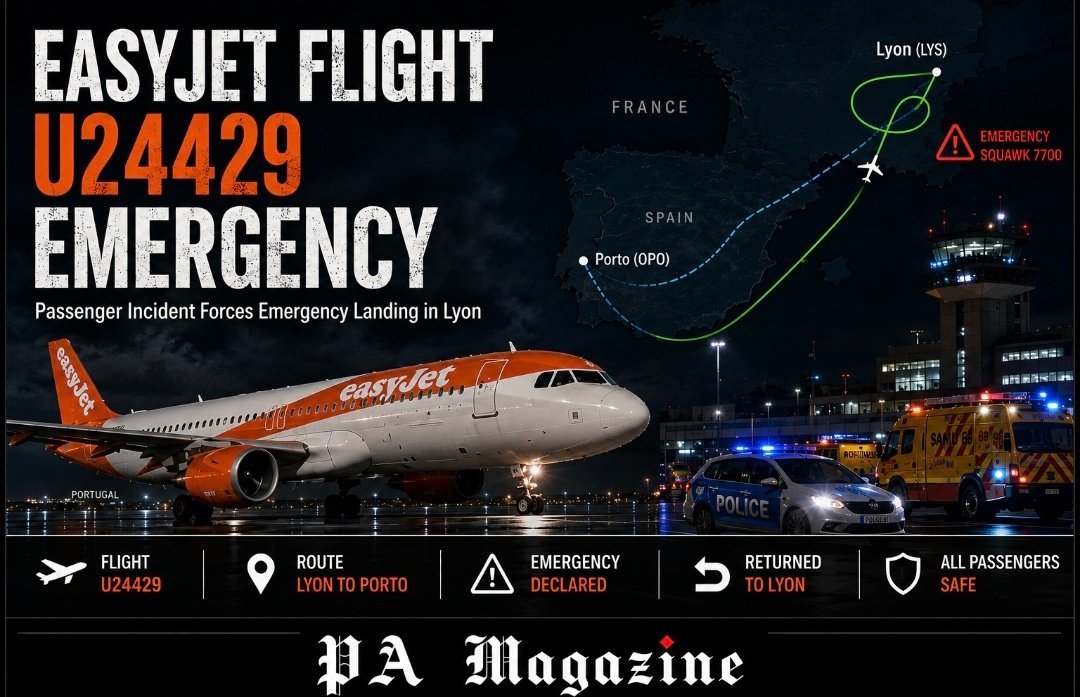
The phrase “easyjet flight u24429 emergency” quickly spread across aviation tracking platforms and news outlets after an alarming mid-air incident forced an EasyJet Airbus A320 to abandon its route and return to France shortly after takeoff. What began as a routine evening flight from Lyon to Porto turned into a tense emergency situation involving passenger behavior, cockpit security concerns, and rapid aviation response procedures.
Commercial aviation incidents attract attention because modern air travel is built around strict safety systems and highly coordinated emergency protocols. When a flight suddenly declares an emergency using the internationally recognized squawk code 7700, it signals that something serious is happening onboard. In the case of the easyjet flight u24429 emergency, early speculation ranged from technical failure to medical complications. Later reports revealed that the emergency was linked to a passenger suffering an acute psychological episode during the flight.
Although everyone onboard ultimately landed safely, the incident opened wider discussions about airline security, crew training, mental health emergencies in aviation, and the increasing frequency of disruptive passenger events across Europe. The story also demonstrated how modern aircraft crews, air traffic controllers, and airport emergency teams are trained to react within minutes when safety is threatened.
What Is easyjet flight u24429 emergency
The term “easyjet flight u24429 emergency” refers to an August 2025 aviation incident involving an EasyJet Airbus A320 operating from Lyon Saint-Exupéry Airport in France to Porto, Portugal. Shortly after departure, the aircraft declared an emergency and returned to Lyon after a passenger reportedly attempted to force access toward the cockpit area during a severe psychological episode.
READ MORE: glasgow water main break shettleston road Triggers City Concerns
Flight tracking data showed the aircraft climbing before suddenly leveling off around 20,000 feet. The crew then transmitted squawk 7700, the universal aviation emergency code recognized by air traffic control systems worldwide.
Cabin crew members and several passengers reportedly restrained the individual while pilots coordinated an immediate return to Lyon. Emergency vehicles, police, and medical teams waited on the ground as the aircraft landed safely less than an hour after takeoff. Authorities later stated that the passenger was suffering from airsickness combined with acute psychotic distress rather than a coordinated criminal act.
The easyjet flight u24429 emergency became widely discussed because it highlighted how quickly an onboard behavioral incident can escalate into a full aviation emergency even without mechanical failure.
How the Incident Unfolded Mid-Air
According to aviation tracking reports and eyewitness accounts, the aircraft departed Lyon with a delay before beginning its climb toward cruising altitude. Within minutes, abnormal activity developed inside the cabin. Witnesses later described panic and confusion as a passenger moved aggressively toward the front section of the aircraft.
The crew responded rapidly. Pilots halted the climb while cabin attendants attempted to stabilize the situation. Once the seriousness of the event became clear, the aircraft transmitted the emergency transponder code. This decision immediately gave the flight priority handling from air traffic controllers and triggered emergency readiness at Lyon Airport.
The easyjet flight u24429 emergency lasted less than an hour from departure to landing, yet within that short period, multiple aviation safety systems activated simultaneously. Controllers cleared airspace for the returning aircraft, airport emergency units prepared runway access, and police units coordinated intervention plans before the plane even touched down.
Passengers later described the atmosphere onboard as tense but controlled. Many credited the crew for remaining calm during the diversion. Despite fear and uncertainty, there were no reported injuries during the return flight.
Why Squawk 7700 Matters in Aviation
One of the most important elements of the easyjet flight u24429 emergency was the aircraft’s use of squawk 7700. In aviation, this code is universally recognized as a general emergency signal. Once activated, the aircraft becomes an immediate priority for air traffic control.
Pilots use this code for a wide range of emergencies, including medical crises, security threats, technical failures, smoke detection, or passenger disturbances severe enough to compromise flight safety. The code does not explain the nature of the problem, but it instantly alerts controllers that urgent assistance is required.
During the easyjet flight u24429 emergency, the squawk transmission allowed controllers to rapidly coordinate the aircraft’s return path and ensure emergency responders were waiting at Lyon. This coordination is one reason commercial aviation maintains an exceptionally strong safety record despite occasional inflight emergencies.
Many travelers hear the phrase “squawk 7700” online without understanding its meaning. In reality, it represents one of aviation’s most critical emergency communication tools.
The Role of Reinforced Cockpit Doors
A major reason the easyjet flight u24429 emergency did not escalate further was the effectiveness of modern cockpit security systems. Following the September 11 attacks, aviation regulators worldwide introduced mandatory reinforced cockpit doors for commercial passenger aircraft.
These doors are designed to withstand forced entry attempts and remain locked throughout flight operations. On Airbus A320 aircraft like the one involved in the easyjet flight u24429 emergency, pilots control cockpit access electronically from inside the flight deck.
Reports surrounding the incident indicate that the passenger never succeeded in breaching the cockpit area. Crew members and nearby travelers intervened before the situation could worsen. Aviation experts later pointed out that cockpit reinforcement procedures implemented over the past two decades likely prevented a far more dangerous outcome.
This incident reminded the public that airline security involves far more than airport checkpoints. Much of modern aviation safety depends on aircraft design changes, procedural discipline, and constant crew training.
Mental Health Emergencies on Commercial Flights
Another important aspect of the easyjet flight u24429 emergency involved the mental health condition reportedly affecting the passenger. Authorities stated that the individual appeared to experience severe psychological distress combined with physical illness during the flight.
Mental health emergencies in aviation remain difficult for airlines to predict. Aircraft cabins create unusual physical and emotional conditions. Anxiety, turbulence, dehydration, alcohol, medication reactions, claustrophobia, and fear of flying can all intensify passenger stress. In rare cases, these factors contribute to panic episodes or psychotic reactions.
Airlines train cabin crews to recognize early warning signs such as erratic speech, agitation, disorientation, or aggressive behavior. However, situations can escalate rapidly in confined spaces thousands of feet above ground.
The easyjet flight u24429 emergency illustrated how aviation incidents are not always caused by technical malfunction. Human behavior can become an equally serious operational threat. It also sparked broader discussions about mental health awareness and how airlines may improve support systems for vulnerable travelers.
How Cabin Crew Training Prevented Greater Danger
Commercial airline crews undergo extensive preparation for emergency scenarios long before they ever operate passenger flights. The calm handling of the easyjet flight u24429 emergency demonstrated why such training matters.
Cabin crew members are not simply hospitality staff. They are certified aviation safety professionals trained in emergency evacuation, conflict management, medical response, fire containment, and passenger restraint procedures. During disruptive incidents, they become the first line of defense inside the aircraft cabin.
Reports suggest crew members worked together with several passengers to physically restrain the distressed traveler while maintaining calm among other passengers.
Managing fear inside a confined aircraft cabin is extremely difficult. Panic can spread quickly, especially when passengers notice unusual flight patterns or emergency announcements. Successful crews maintain controlled communication, clear instructions, and visible composure even under pressure.
The easyjet flight u24429 emergency became a real-world example of why airlines place such heavy emphasis on emergency drills and behavioral response training.
Emergency Landings and Airline Decision-Making
Airline crews must make rapid decisions when abnormal situations arise. In the easyjet flight u24429 emergency, pilots chose to return to Lyon instead of continuing toward Porto. This decision reflected standard aviation risk management principles.
When security concerns develop shortly after departure, returning to the departure airport is often the safest option because ground services, medical teams, and police coordination can be organized quickly. Pilots also know the airport layout, runway conditions, and operational environment more thoroughly than distant alternates.
Emergency landings are carefully structured operations rather than chaotic reactions. Pilots work through detailed checklists while maintaining constant communication with controllers. Airport rescue and firefighting units prepare for potential complications before the aircraft arrives.
The smooth landing during the easyjet flight u24429 emergency demonstrated how coordinated these systems have become within modern European aviation networks.
Rising Concerns About Disruptive Passenger Incidents
The easyjet flight u24429 emergency also reflected a growing challenge facing airlines globally. Aviation organizations have reported increasing levels of disruptive passenger behavior in recent years.
While serious cockpit-related incidents remain extremely rare, airlines have experienced rising cases involving aggression, intoxication, medical instability, and onboard confrontations. Aviation experts believe several post-pandemic factors contributed to this trend, including heightened anxiety, travel stress, and reduced passenger tolerance during delays or disruptions.
Airlines across Europe have responded by strengthening reporting systems, crew training standards, and passenger penalties for dangerous conduct. Some countries have expanded financial fines and no-fly restrictions for individuals who threaten flight safety.
The easyjet flight u24429 emergency reinforced why aviation authorities treat disruptive behavior seriously even when no lasting injuries occur. Any event capable of distracting pilots or threatening cabin stability is considered a direct safety issue.
Media Attention and Public Reaction
The incident gained substantial online attention because flight tracking enthusiasts quickly noticed the emergency squawk signal and unexpected return pattern. Social media platforms amplified the story within minutes as aviation watchers shared radar screenshots and emergency updates.
Public fascination with aviation emergencies often comes from the contrast between modern aviation’s strong safety reputation and the emotional intensity of inflight crises. Many people rarely consider how frequently crews train for such scenarios until an incident becomes visible online.
The easyjet flight u24429 emergency also generated debate about how quickly unverified information spreads during aviation events. Early rumors included mechanical failure theories before official details emerged about the passenger-related disturbance.
This pattern has become common in modern aviation news. Real-time flight tracking tools provide unprecedented visibility into aircraft movements, but accurate context often arrives much later through airline statements and official investigations.
READ MORE: M6 Walsall Birmingham Lanes Closure Triggers Travel Chaos
Conclusion
The easyjet flight u24429 emergency was ultimately resolved without injuries, but the incident revealed how many layers of aviation safety operate behind the scenes during a crisis. From cockpit security systems and emergency squawk procedures to cabin crew training and airport coordination, the event demonstrated how commercial aviation manages unpredictable situations under extreme time pressure.
Although the emergency centered on a passenger experiencing severe psychological distress, the response showcased the professionalism of airline crews and emergency responders. The aircraft returned safely, the passenger received medical attention, and the flight later continued to its destination after authorities secured the situation.
Incidents like the easyjet flight u24429 emergency remind travelers that aviation safety is not built on luck. It depends on preparation, communication, and systems designed to respond immediately when normal operations break down. Even in tense moments thousands of feet above ground, trained professionals work through structured procedures that prioritize passenger safety above everything else.
FAQs
What caused the easyjet flight u24429 emergency?
The emergency was reportedly caused by a passenger experiencing acute psychological distress who attempted to move toward the cockpit area during the flight.
What does squawk 7700 mean?
Squawk 7700 is the international aviation transponder code used to signal a general emergency to air traffic control.
Did the aircraft land safely?
Yes, the aircraft returned safely to Lyon Saint-Exupéry Airport, where emergency services and police were waiting on the ground.
Were passengers injured during the incident?
Reports indicated there were no serious injuries among passengers or crew members during the easyjet flight u24429 emergency.
Did the flight eventually continue to Porto?
Yes, after authorities removed the passenger and cleared the aircraft, the flight later resumed its journey to Porto.
READ MORE: https://pamagazine.co.uk/

Introduction
The phrase “m6 walsall birmingham lanes closure” has become increasingly familiar to commuters, logistics operators, and West Midlands residents over the last few years. Few motorway corridors in the United Kingdom carry as much daily pressure as the M6 stretch connecting Walsall and Birmingham. It serves not only local drivers but also freight traffic, long-distance transport, airport connections, and regional commuters moving between major urban centers.
When lane closures occur on this section of motorway, the disruption spreads far beyond the immediate area. Morning journeys become unpredictable, delivery schedules are delayed, and nearby A-roads quickly absorb overflow traffic. What may appear to be a simple motorway maintenance project often develops into a wider transportation issue affecting thousands of people every day.
The recent attention surrounding m6 walsall birmingham lanes closure events reflects how critical this motorway has become to the economic and social movement of the West Midlands. Drivers traveling between Junctions 5, 6, 7, 9, and 10 frequently experience congestion caused by resurfacing works, bridge repairs, emergency incidents, and overnight engineering projects. Because the motorway links directly with routes toward Birmingham city centre, the M5, the M42, and the M54, even partial lane restrictions can create severe delays across the regional network.
Understanding why these closures happen, how they are managed, and what impact they create gives motorists a clearer picture of one of Britain’s busiest motorway systems.
What Is m6 walsall birmingham lanes closure
The term “m6 walsall birmingham lanes closure” refers to planned or emergency restrictions affecting traffic lanes on the M6 motorway between Walsall and Birmingham in the West Midlands region of England. These closures may involve single-lane restrictions, hard shoulder closures, overnight carriageway shutdowns, or full motorway closures between key junctions.
READ MORE: newsakmi.com sports Is Changing Modern Sports Reporting
Most closures are introduced by National Highways to allow major maintenance work, resurfacing projects, bridge joint replacement, safety barrier repairs, drainage improvements, or emergency recovery operations. In some situations, accidents involving heavy goods vehicles, fuel spills, or damaged road surfaces force authorities to shut lanes immediately to protect drivers and repair crews.
The section around Birmingham and Walsall is especially sensitive because it carries exceptionally high traffic volumes. The motorway intersects with several strategic routes, including the A34 corridor and the notorious Spaghetti Junction area near Birmingham. Traffic demand regularly exceeds what parts of the road were originally designed to handle decades ago.
As a result, the m6 walsall birmingham lanes closure issue is not simply about temporary inconvenience. It reflects the ongoing challenge of maintaining an aging but heavily relied-upon motorway infrastructure while keeping millions of journeys moving safely.
Why the M6 Around Walsall and Birmingham Faces Frequent Closures
The M6 through the West Midlands is among the most heavily used motorway corridors in Britain. Unlike quieter motorway stretches in rural regions, this route experiences constant pressure from commuter traffic, commercial transport, airport access vehicles, and long-distance freight movement.
One of the biggest reasons for repeated m6 walsall birmingham lanes closure projects is infrastructure fatigue. Much of this motorway network was built decades ago, long before today’s traffic density existed. Bridges, viaducts, road surfaces, drainage systems, and expansion joints now require regular repairs to remain safe.
National Highways has conducted multiple maintenance schemes around Junctions 5 to 10, including resurfacing work, bridge joint replacement, and viaduct maintenance. Several of these operations require overnight lane closures or complete directional shutdowns because crews need uninterrupted access to repair damaged structures safely.
Another major factor is the design complexity of Birmingham’s motorway network. The area near Spaghetti Junction is one of the most intricate road systems in Europe. Traffic merges from several directions simultaneously, creating heavy strain on road surfaces and increasing accident risks.
Weather conditions also contribute to recurring closure periods. Heavy rainfall, winter freezing, and summer heat expansion can damage surfaces and bridge components, forcing emergency maintenance schedules that were not originally planned.
The Economic Impact of Lane Closures
The economic consequences of m6 walsall birmingham lanes closure events extend far beyond frustrated commuters. This motorway acts as a commercial artery connecting the Midlands with northern and southern England. Delays on this route directly affect supply chains, freight deliveries, and regional business productivity.
Transport operators often face rising fuel costs when traffic slows for miles during peak congestion periods. Delivery schedules become harder to maintain, especially for businesses relying on time-sensitive logistics. Warehouses, retail suppliers, and manufacturing companies across the Midlands frequently experience knock-on disruptions when motorway traffic becomes gridlocked.
Small businesses near Birmingham and Walsall can also suffer indirectly. Employees arriving late due to motorway congestion affect staffing efficiency, while customer access to local commercial areas becomes less predictable.
The freight industry is especially vulnerable because heavy goods vehicles rely heavily on the M6 corridor. Even partial lane restrictions can create major bottlenecks when lorries struggle to merge into reduced carriageway space.
According to traffic monitoring sources, congestion around Junctions 7 and 10 regularly creates delays during closure periods because of the high volume of merging vehicles moving between Walsall, Birmingham, and surrounding regional roads.
How Closures Affect Local Communities
While national attention often focuses on motorway users, local communities experience some of the most severe effects of m6 walsall birmingham lanes closure situations.
When motorway lanes shut, drivers frequently divert onto local roads through Walsall, Great Barr, Aston, and surrounding residential areas. Roads never designed for heavy traffic suddenly become overloaded during peak hours. Residents often report longer travel times, increased noise pollution, and more dangerous driving conditions near schools and local shopping areas.
Bus services may also face delays when diversion traffic overwhelms nearby routes. Emergency services sometimes encounter slower response times during severe congestion periods, especially when major incidents occur near motorway exits.
Air quality concerns have become another growing issue. Extended traffic queues create higher emissions in urban areas already dealing with environmental pressures. Long stretches of idling traffic near Birmingham and Walsall contribute to local pollution concerns during major closure operations.
For residents living near the motorway corridor, nighttime maintenance projects can also create disruption. Construction noise, lighting equipment, and overnight engineering operations sometimes continue for weeks during major infrastructure repair schemes.
Major Recent Maintenance Projects on the M6
Several significant motorway works have contributed to recent m6 walsall birmingham lanes closure updates. National Highways has overseen bridge joint replacement programs, resurfacing operations, and viaduct maintenance throughout the West Midlands corridor.
One notable project involved bridge joint replacement between Junctions 6 and 7, requiring full northbound and southbound closures across different phases. Hard shoulder closures remained active continuously during parts of the project to allow engineers safe access to damaged structures.
Additional resurfacing works between Junctions 6 and 4 introduced overnight closures aimed at improving carriageway durability and driver safety. Authorities typically schedule these operations overnight to reduce daytime disruption, although delays often continue into morning rush hours.
Bridge maintenance on the Bromford Viaduct section has also required periodic restrictions. This area is structurally important because it carries massive traffic volumes daily through Birmingham’s motorway network.
Maintenance projects are expected to continue regularly in future years because the motorway remains under intense operational pressure.
The Role of Traffic Accidents in Lane Closures
Not all m6 walsall birmingham lanes closure events are planned. Serious accidents remain one of the biggest causes of sudden motorway disruption.
Collisions involving heavy goods vehicles can create especially severe incidents because recovery operations often require cranes, fuel cleanup teams, and extended police investigations. Oil spills, overturned lorries, and damaged barriers frequently lead to multi-lane closures lasting several hours.
Traffic congestion itself can increase accident risk. Drivers trapped in stop-start motorway conditions may become fatigued or distracted, particularly during long commuting periods.
Emergency lane closures are more difficult for authorities to manage because there is little time to prepare diversion strategies. As a result, surrounding roads near Walsall and Birmingham can become overwhelmed rapidly after major incidents occur.
Modern traffic monitoring systems now allow authorities to update drivers faster than in previous decades, but sudden motorway incidents still create widespread disruption across the region.
Why Drivers Struggle Most Around Junctions 6 to 10
The stretch between Junctions 6 and 10 has developed a reputation as one of the most difficult motorway areas in the Midlands.
Several factors combine to create persistent congestion problems. First, this corridor serves a dense urban population. Second, it connects multiple strategic routes including the M5, M42, A38, and M54. Third, heavy freight traffic moving north and south through Britain passes directly through this section.
Junction 7 near Great Barr is especially known for congestion because it connects the M6 with the A34 route between Birmingham and Walsall. Traffic merging from local roads frequently slows motorway movement during peak commuting hours.
Meanwhile, the area around Junction 6 near Spaghetti Junction presents engineering challenges due to the sheer complexity of intersecting roads and elevated structures.
When lane closures reduce motorway capacity in these areas, congestion escalates rapidly because there are limited alternative routes capable of absorbing the overflow efficiently.
How Authorities Manage Traffic During Closures
Managing m6 walsall birmingham lanes closure operations requires coordination between National Highways, local councils, police services, and traffic monitoring teams.
Authorities usually deploy advance warning signs miles before closure zones begin. Electronic overhead gantries provide real-time speed restrictions and lane instructions aimed at reducing sudden braking and collisions.
Diversion routes are carefully planned to redirect vehicles around closure areas. However, during severe disruption, surrounding local roads can still become heavily congested because diversion capacity remains limited.
Traffic officers patrol affected areas to respond quickly to breakdowns and maintain traffic flow. CCTV monitoring systems also help authorities identify developing congestion patterns in real time.
Overnight working schedules are often chosen because traffic volumes are lower, but some projects require round-the-clock restrictions due to engineering complexity or safety concerns.
READ MORE: newsakmi and the Rise of Community-Driven Modern News
Conclusion
The ongoing issue of m6 walsall birmingham lanes closure reflects the enormous importance of the M6 motorway within Britain’s transportation network. This section of road carries far more than ordinary commuter traffic. It supports regional business activity, national freight movement, and daily mobility across the West Midlands.
While lane closures frustrate drivers and create economic pressure, many of these projects are necessary to maintain safety on one of the country’s busiest motorway corridors. Aging infrastructure, heavy traffic loads, and increasing repair demands mean that maintenance operations are likely to remain a regular part of travel around Walsall and Birmingham for years to come.
For motorists, preparation has become essential. Checking live traffic updates, planning alternative routes, and allowing extra journey time can significantly reduce the stress caused by motorway restrictions.
The challenge for transport authorities remains balancing essential infrastructure repairs with the need to keep millions of journeys moving efficiently every week. As traffic demand continues growing, the pressure surrounding m6 walsall birmingham lanes closure events is unlikely to disappear anytime soon.
FAQs
Why are there frequent lane closures on the M6 near Walsall and Birmingham?
Frequent closures happen because this section of motorway requires regular maintenance, resurfacing, bridge repairs, and safety improvements due to extremely heavy traffic volumes.
Which M6 junctions are most affected by closures in the West Midlands?
Junctions 5 through 10 are commonly affected, especially around Junction 6 near Spaghetti Junction and Junction 7 near Great Barr.
Do overnight motorway closures still affect morning traffic?
Yes. Even when work is scheduled overnight, congestion can continue into morning rush hours if projects overrun or traffic builds early.
How do lane closures impact local roads in Birmingham and Walsall?
Drivers often divert onto nearby roads during motorway restrictions, creating congestion, delays, and increased traffic pressure in residential areas.
Are most M6 lane closures planned or caused by accidents?
Both occur regularly. Planned engineering works are common, but accidents involving lorries, oil spills, and vehicle breakdowns also cause emergency closures.
READ MORE’ https://pamagazine.co.uk/

Who Is eugene gligor? The Shocking True Crime Story

Who Is alyssa pladl? A Tragic Story of Survival and Loss

vçç and the Hidden Shift in Modern Expression Systems

Who Is Kathy Sudeikis? Everything About Jason Sudeikis’s Mother

Who Is ryker webb? The Boy Who Survived Montana Wilds
